
Evolve Peptides MOTS-c: the mitochondrial peptide explained
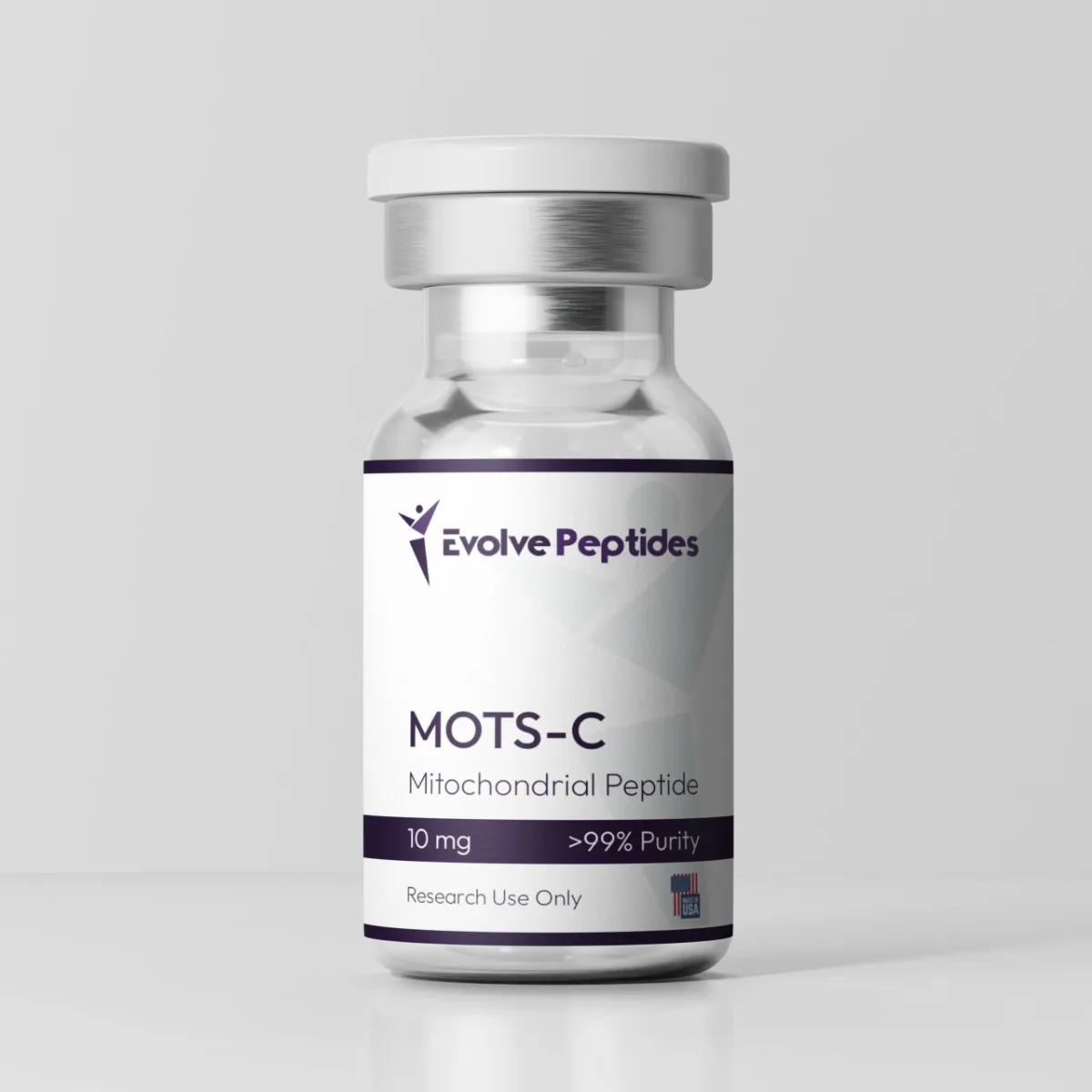
Evolve Peptides MOTS-c comes in 10mg and 40mg vials. MOTS-c is unusual because it is coded in mitochondrial DNA, not the cell nucleus. Here is what it does in the lab, what the key studies found and how our two sizes compare.
What is Evolve Peptides MOTS-c?
MOTS-c is a 16-amino-acid peptide whose code sits in the 12S rRNA region of mitochondrial DNA. It was described in 2015 by Changhan Lee and colleagues at the University of Southern California, in Cell Metabolism. Our vials hold lyophilized MOTS-c for laboratory research.
Evolve Peptides MOTS-c sizes and prices
- MOTS-c 10mg: $60.00, about $6.00 per mg
- MOTS-c 40mg: $179.90, about $4.50 per mg
The 10mg vial suits a first study. The 40mg vial is the better buy for longer projects, as long as you use it within about four weeks once mixed.
How MOTS-c works in the lab
In the original work, MOTS-c acted mainly on skeletal muscle. It disrupted the folate cycle, which raised levels of AICAR, and that switched on AMPK, the cell’s energy sensor. Under stress, MOTS-c also moved into the nucleus and changed which genes were switched on.
MOTS-c research highlights
In mice, MOTS-c protected against diet-induced obesity and insulin resistance in the 2015 paper. A 2021 study by Reynolds and colleagues in Nature Communications found that exercise raised MOTS-c levels and that treatment improved physical capacity in older mice. For the papers, try this PubMed search for MOTS-c.
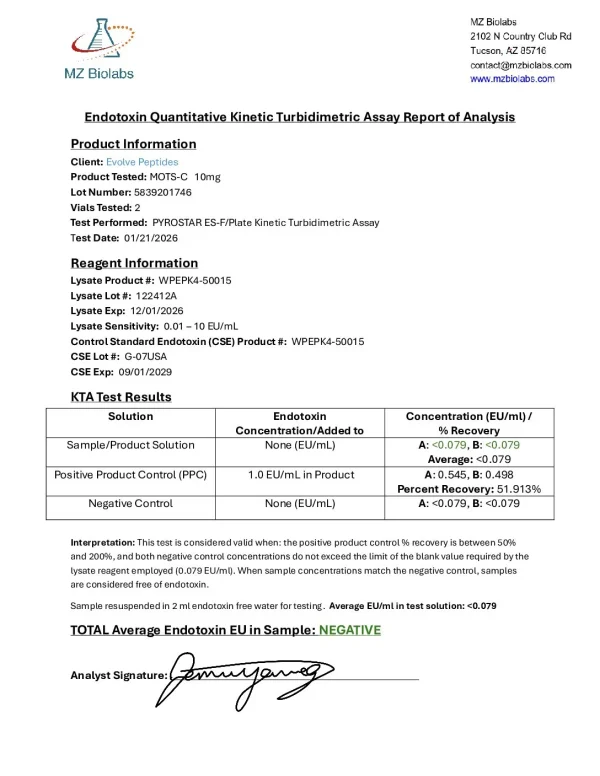
Lab reports for Evolve Peptides MOTS-c
The MOTS-c photos include a certificate of analysis with identity, quantity and HPLC purity, plus an endotoxin report from a kinetic LAL assay. Our lab testing page explains how to read them.
Reconstituting Evolve Peptides MOTS-c
MOTS-c dissolves readily in bacteriostatic water. A 10mg vial with 2ml gives 5mg/ml. A 40mg vial needs more water, usually 2 to 5ml, which gives 20mg/ml down to 8mg/ml. Let the water run down the side of the vial and swirl gently until it’s clear. Our reconstitution guide walks through the math.
Storing MOTS-c
Sealed vials keep best in the fridge, or at -20°C for long storage, away from light. Once mixed, keep the vial in the fridge and use it within about 28 days. Label it with the concentration and the date so nobody has to guess later.
Who studies MOTS-c
MOTS-c turns up in metabolism, exercise and aging research. Labs use it in models of insulin resistance, muscle function in older animals and the cell stress response. It’s also one of a small family of mitochondria-derived peptides, alongside humanin, which is why mitochondrial biology groups follow it closely.
Evolve Peptides MOTS-c 10mg or 40mg?
Work out how much MOTS-c your study will use in four weeks, since a mixed vial lasts about that long in the fridge. If it’s 10mg or less, the 10mg vial avoids waste. If it’s more, the 40mg vial saves about a quarter on every milligram.
Related research peptides
MOTS-c is often studied next to other mitochondrial and aging compounds: SS-31, NAD+ and Epithalon. See the full anti-aging peptides range, or the weight loss peptides page for the metabolic side.
Evolve Peptides MOTS-c FAQ
What sizes does Evolve Peptides MOTS-c come in?
10mg and 40mg vials.
Which size is better value?
The 40mg vial, at about $4.50 per mg against $6.00 for the 10mg.
Is MOTS-c lab tested?
Yes. The product photos show a certificate of analysis and an endotoxin report.
Is MOTS-c for human use?
No. It’s sold for laboratory research only.
Buy MOTS-c 10mg from Evolve Peptides
In stock in 10mg and 40mg, with lab reports in the photos.
All Evolve Peptides products are sold for laboratory research use only. They are not for human or veterinary use and have not been evaluated by the FDA.