
Peptide reconstitution guide
Peptide reconstitution means adding a sterile liquid to a freeze-dried vial so you can measure from it. This guide covers what to use, how much to add and how to work out the concentration, with examples from the Evolve Peptides range.
What peptide reconstitution involves
Most research peptides ship as lyophilized powder because a dry peptide stays stable far longer than one in solution. Before use, you add a measured volume of liquid, dissolve the powder and label the vial with the concentration and the date.
The standard liquid is bacteriostatic water: sterile water with 0.9% benzyl alcohol, which stops bacteria growing between draws. The official bacteriostatic water labels on DailyMed list the full ingredients. Plain sterile water has no preservative and is meant for a single use.
Peptide reconstitution math
Concentration is the amount of peptide divided by the volume of water. That’s all there is to it. A 10mg vial with 2ml of water gives 5mg/ml, and the same vial with 1ml gives 10mg/ml. Pick a volume that makes your own measurements easy, then write the result on the label.
Large vials need more water. NAD+ 500mg and L-glutathione 600mg usually take 5 to 10ml, so the 30ml bacteriostatic water vial suits them better than the 10ml.
Step by step
- Let the sealed vial reach room temperature so no condensation gets in.
- Wipe both stoppers with an alcohol swab.
- Draw the volume of bacteriostatic water you’ve chosen.
- Let the water run slowly down the inside wall of the peptide vial, not straight onto the powder.
- Swirl or roll gently until the solution is clear. Don’t shake it.
- Label the vial with the concentration and the date, and keep it in the fridge.
Storage after peptide reconstitution
Mixed peptides go back in the fridge at 2 to 8°C and should be used within about 28 days, the shelf life of an opened bacteriostatic water vial. Sealed, unmixed vials keep longer in the fridge, or at -20°C for long-term storage.
Peptide reconstitution for blends
Blends work the same way, using the total amount in the vial. The BPC-157 and TB-500 blend 10mg/10mg holds 20mg in all, so 2ml of water gives 10mg/ml of total peptide, which is 5mg/ml of each. The product page for every blend lists the totals for you.
Common peptide reconstitution mistakes
- Spraying water straight onto the powder, which can foam and damage the peptide
- Shaking the vial instead of swirling it
- Forgetting to label the vial with the concentration and date
- Using plain sterile water for a vial you’ll draw from many times
Peptide reconstitution for large vials
Big vials follow the same rule with bigger numbers. NAD+ 500mg with 5ml gives 100mg/ml, and with 10ml it gives 50mg/ml. L-glutathione 600mg with 10ml gives 60mg/ml. Use the 30ml bacteriostatic water vial for these, and check the product page for the full table.
Exceptions
A few peptides dissolve poorly at neutral pH. IGF-1 LR3 is the usual example, and many labs use a dilute acetic acid solution for it instead. Capsules, such as BPC-157 capsules, need no reconstitution at all.
Bacteriostatic water for peptide reconstitution
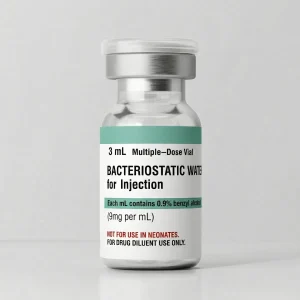

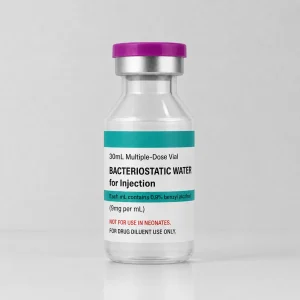
Choose the 3ml vial for a single peptide, the 10ml vial for regular use, or 30ml if you mix often. Every vial product page on our site has its own reconstitution table, so you can check the numbers for the exact size you bought.
Get bacteriostatic water with your order
Add a vial to your cart with your peptides so everything arrives together.
All Evolve Peptides products are sold for laboratory research use only. They are not for human or veterinary use and have not been evaluated by the FDA.