Description
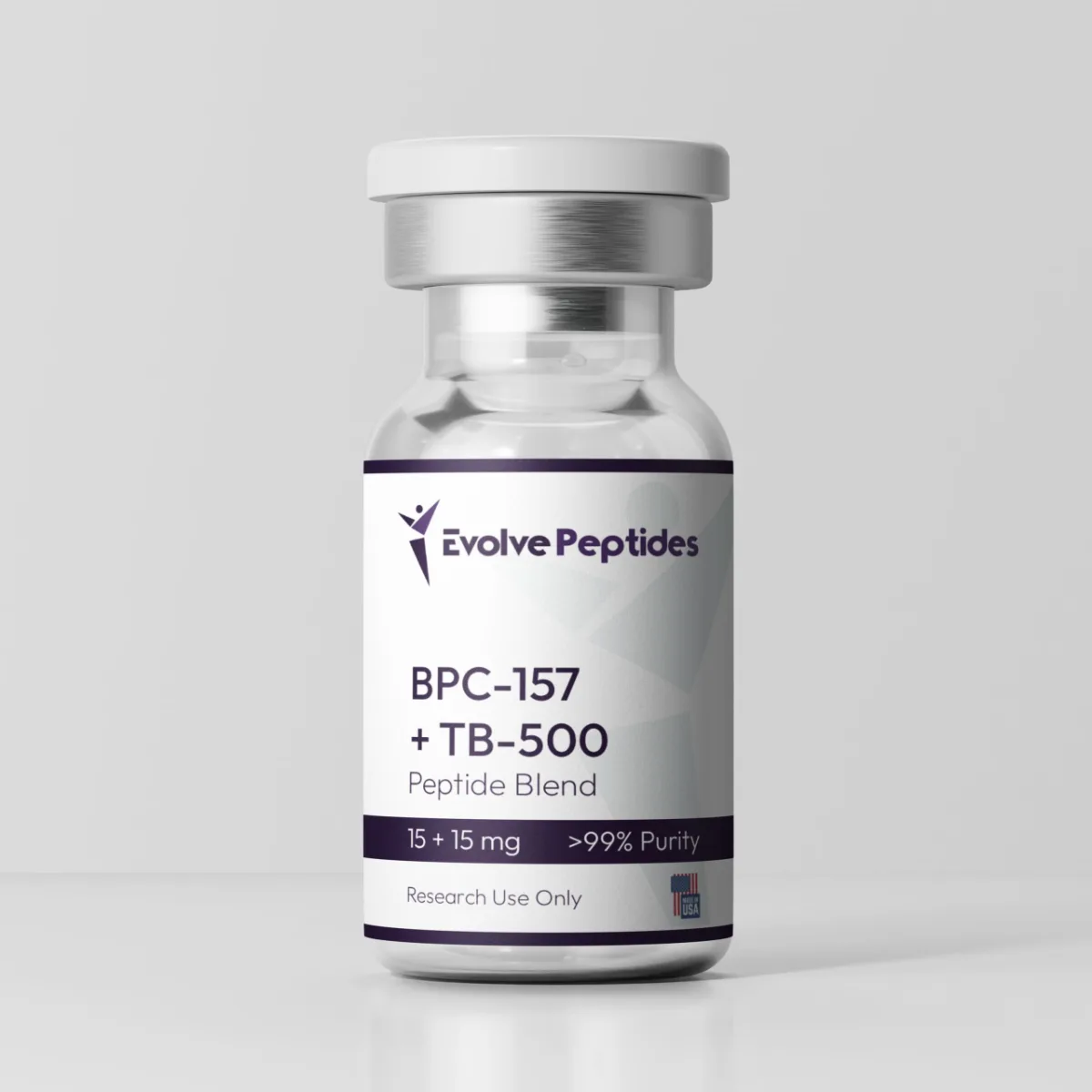
The BPC-157 and TB-500 blend 15mg vial from Evolve Peptides holds 15mg/15mg of BPC-157 and TB-500, freeze-dried together. It’s for laboratory research only.
What the BPC-157 and TB-500 blend contains
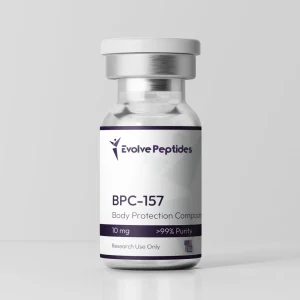
BPC-157: BPC-157 is a 15-amino-acid peptide based on a fragment of body protection compound, a protein first found in gastric juice. It’s one of the most widely studied research peptides, almost entirely in rodents.
TB-500: Thymosin beta-4 is a 43-amino-acid protein found in nearly every cell, where it binds actin and helps control cell movement. TB-500 is the name used for synthetic thymosin beta-4 and for a short fragment of its active region.
The ratio is fixed at 15mg/15mg, so every draw from the vial has the same proportions. That’s the main reason labs buy a blend: one reconstitution, one label, no drift between separate vials.
Mechanisms behind the BPC-157 and TB-500 blend
Nobody has pinned down a single receptor for BPC-157. Lab studies point to several pathways: it raises VEGF receptor expression, which feeds blood vessel growth, it interacts with the nitric oxide system, and it increases growth hormone receptor levels in tendon cells.
Thymosin beta-4’s main job is holding on to G-actin, the building block of the cell’s internal scaffolding. By controlling how much actin is free to polymerize, it controls how cells move and change shape.
BPC-157 and TB-500 blend 15mg at a glance
- BPC-157: CAS 137525-51-0, C62H98N16O22, 1,419.5 g/mol
- TB-500: CAS 77591-33-4, C212H350N56O78S, 4,963.4 g/mol
- Amount: 15mg/15mg in one vial
- Form: lyophilized (freeze-dried) powder
- SKU: EVP-BPCTB-15
- Use: laboratory research only
What the research says about BPC-157 and TB-500
Most of the work comes from Predrag Sikiric’s group at the University of Zagreb. Their rodent studies report faster healing of tendon, ligament, muscle and gut injuries, and Mikus and colleagues described improved burn wound healing in mice.
Chang and colleagues reported in 2011 that BPC-157 raised growth hormone receptor expression in rat tendon fibroblasts. Controlled human data are very limited.
Goldstein and colleagues reviewed thymosin beta-4’s role in wound repair in 2012, covering faster closure of skin wounds and new blood vessel growth in animal models.
Bock-Marquette and colleagues reported in Nature (2004) that thymosin beta-4 improved heart cell survival after injury in mice.
To read the papers yourself, start with this PubMed search for BPC-157 and TB-500.
Lab testing for BPC-157 and TB-500 blend 15mg
Scroll through the BPC-157 and TB-500 blend 15mg photos and you’ll find:
- A certificate of analysis with identity, measured quantity and HPLC purity.
- An independent Janoshik Analytical test report. You can verify it on janoshik.com with the key printed at the bottom.
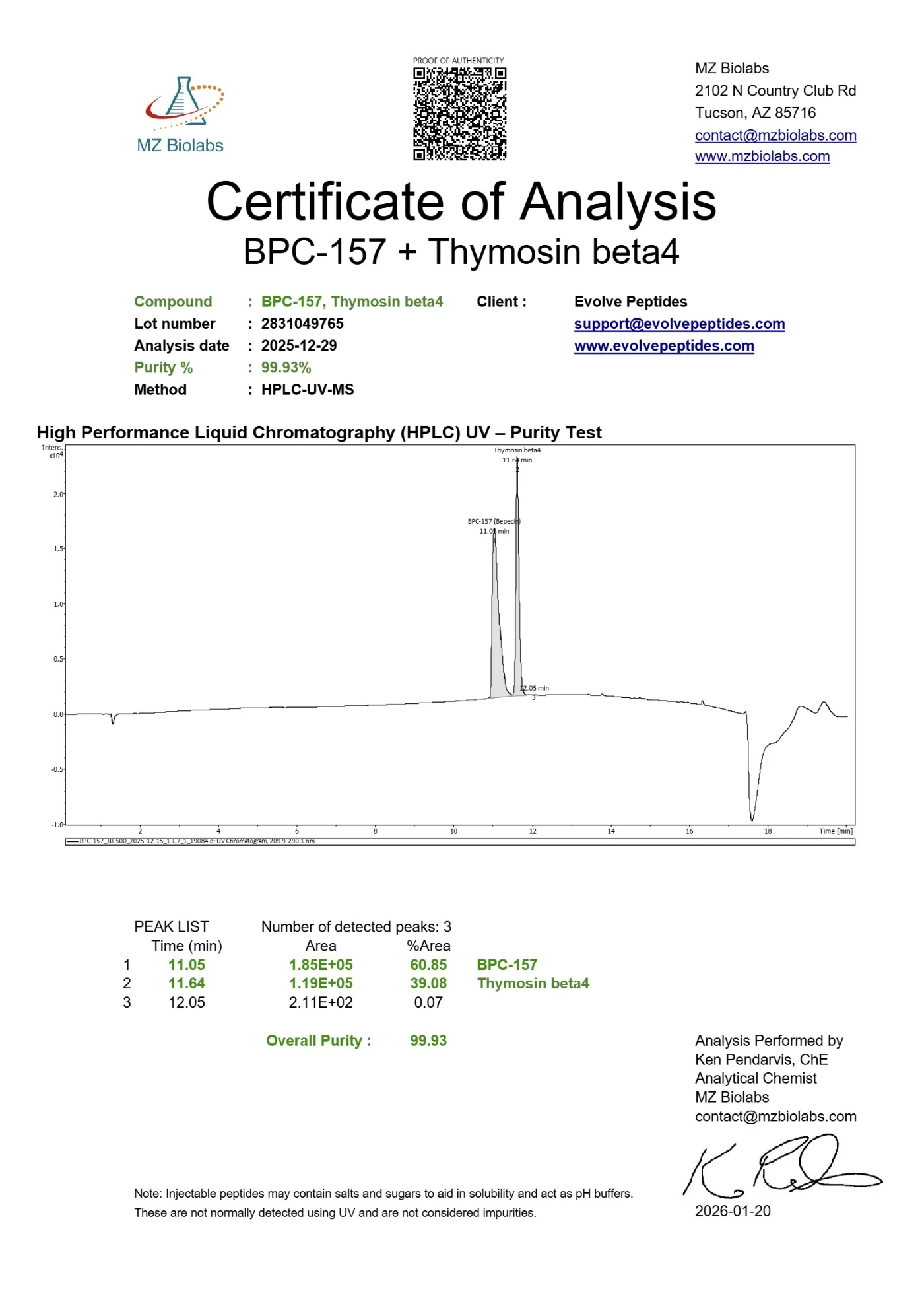
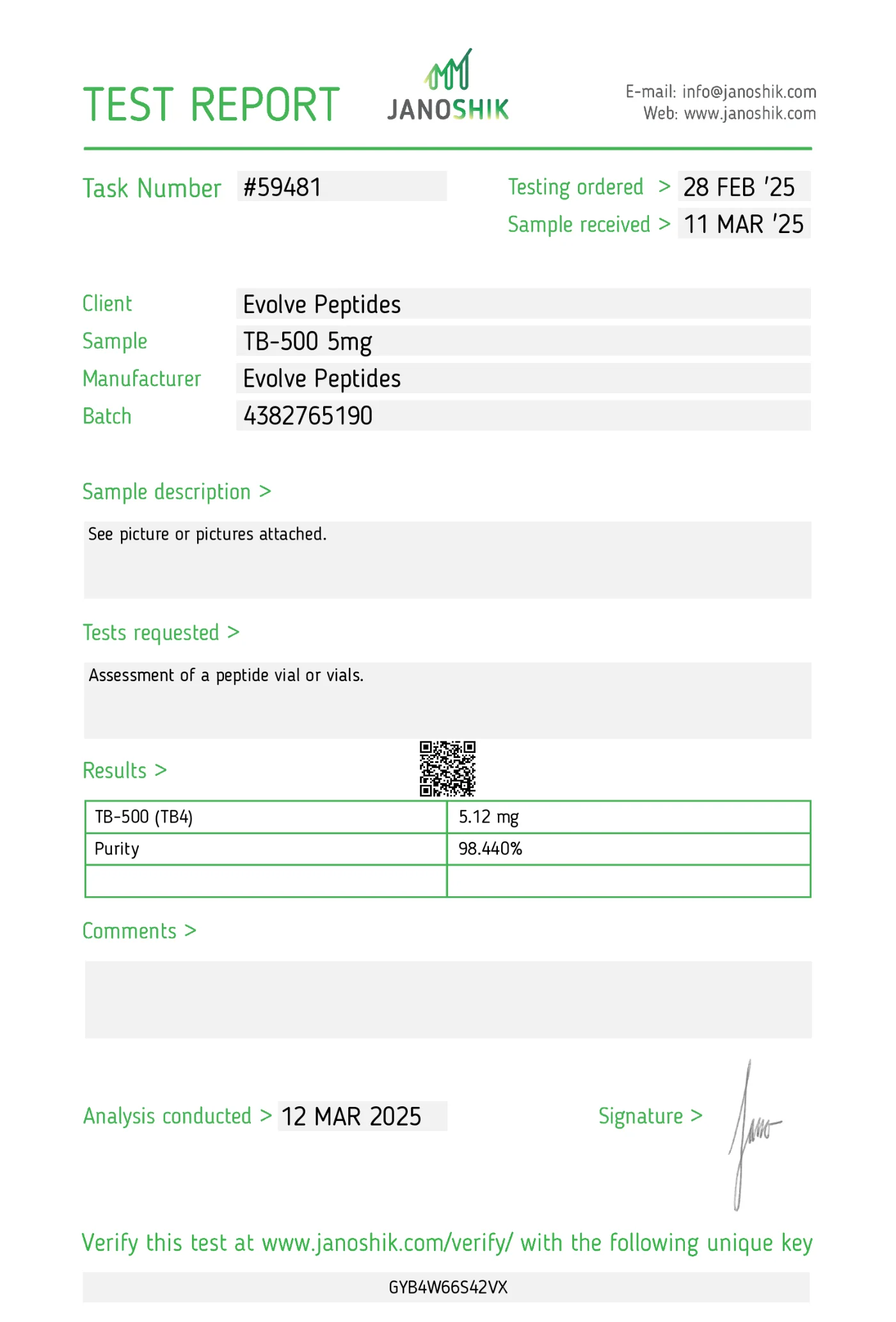
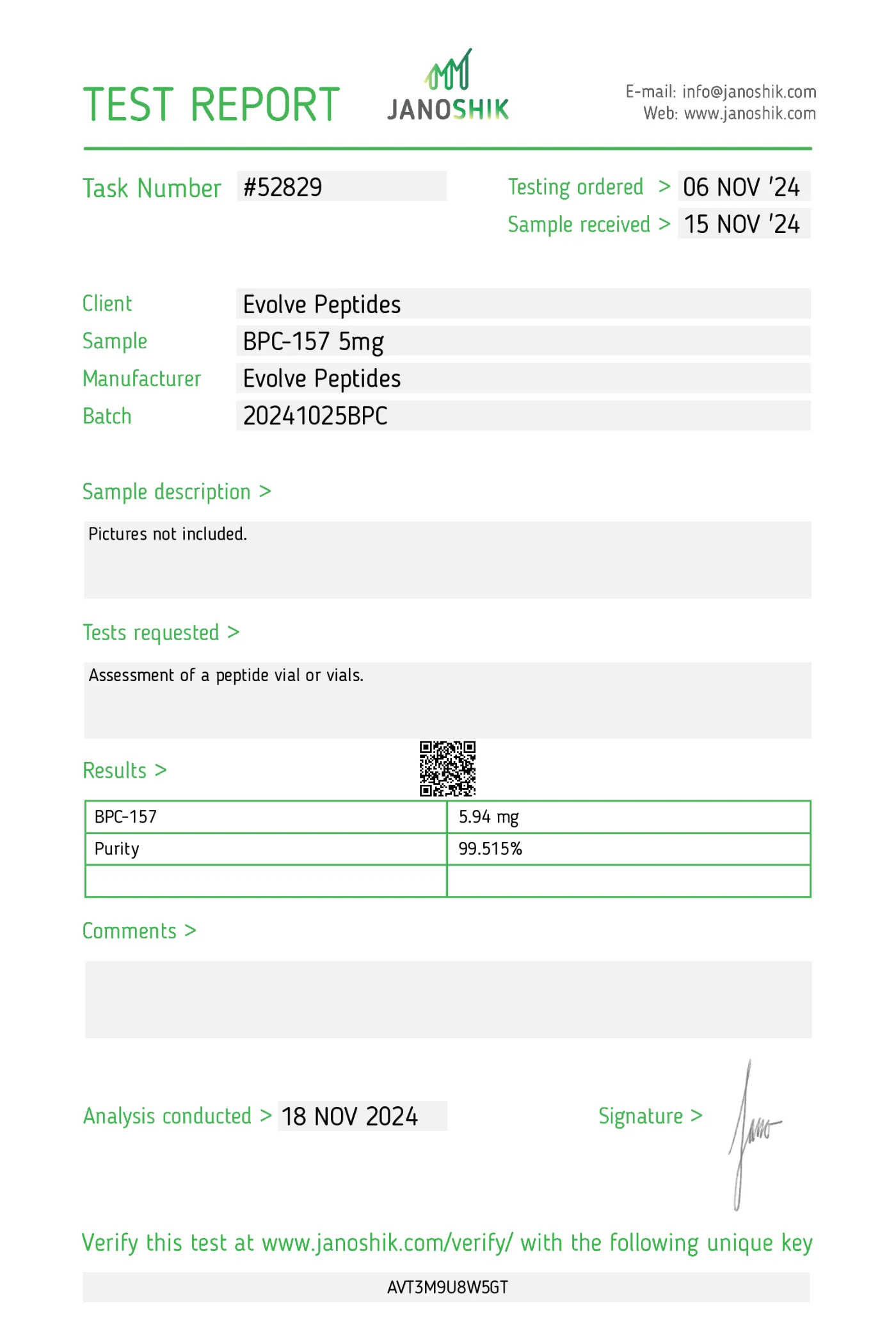
Click any image to zoom in on the numbers. Where a report names a different size, the lab tested a sibling BPC-157 and TB-500 vial. Read the purity line, not the quantity line, when comparing.
BPC-157 and TB-500 blend 15mg reconstitution and concentration
Here’s the math for 30mg of peptide:
- 2ml of bacteriostatic water gives 15mg/ml
- 3ml of bacteriostatic water gives 10mg/ml
- 5ml of bacteriostatic water gives 6mg/ml
Choose the volume that suits your measurements. Mark the vial with the concentration and date so nobody has to guess later.
Use sterile bacteriostatic water. Warm the sealed vial to room temperature first so no condensation gets in, add the water slowly along the glass wall, and swirl gently until it’s clear. Never shake.
Storage and shelf life
The dry powder keeps best cold: 2 to 8°C in the fridge, or -20°C for long-term storage. After reconstitution, store it in the fridge and finish it within roughly four weeks.
Choosing a BPC-157 and TB-500 size
- BPC-157 and TB-500 Blend 5mg/5mg: 5mg/5mg for $89.90
- BPC-157 and TB-500 Blend 10mg/10mg: 10mg/10mg for $159.90
- BPC-157 and TB-500 Blend 15mg/15mg (this page): 15mg/15mg for $199.90
For longer projects BPC-157 and TB-500 blend 15mg works out cheapest per milligram, and you’ll reorder less often.
Related research peptides
- Thymosin Alpha-1 10mg, thymic peptide
- BPC-157 20mg, 15-amino-acid peptide
- LL-37 2mg, antimicrobial peptide
- VIP 10mg, neuropeptide
- KPV Capsules 500mcg, 60 capsules
Browse the full healing and recovery peptides range, or see every vial on our research peptides page.
Common questions about BPC-157 and TB-500 blend 15mg
How much is in the BPC-157 and TB-500 blend 15mg vial?
15mg/15mg of lyophilized powder. The amount is printed on the label.
Which size should I buy?
Pick by how much you’ll use. Bigger vials cost less per milligram, smaller ones mean less sits open in the fridge. The size comparison above lists every BPC-157 and TB-500 option.
What do I mix BPC-157 and TB-500 blend 15mg with?
Sterile bacteriostatic water. The reconstitution section above shows the concentration for each volume.
How should I store it?
Sealed vials go in the fridge, or the freezer for long-term storage. Once mixed, refrigerate and use within about 28 days.
Can BPC-157 and TB-500 be used in people or animals?
No. It’s sold for laboratory research only and isn’t approved for human or veterinary use.
Buy BPC-157 and TB-500 blend 15mg online
BPC-157 and TB-500 blend 15mg is in stock at $199.90. Choose your quantity, add it to the cart and check out in a couple of minutes. Add a vial of bacteriostatic water if you don’t have any, so you’re ready to reconstitute when it arrives.
Need more for the same project? See the rest of our healing and recovery peptides.
For laboratory research use only. Not for human or veterinary use. Not evaluated by the FDA.


Reviews
There are no reviews yet.